The deadly drug that’s complicating US-China trade
Since Trump’s tariffs blamed China for the US fentanyl crisis, Beijing insists it’s America’s problem but has tightened controls on drug precursors to show goodwill, hoping for trade leverage and better cooperation.
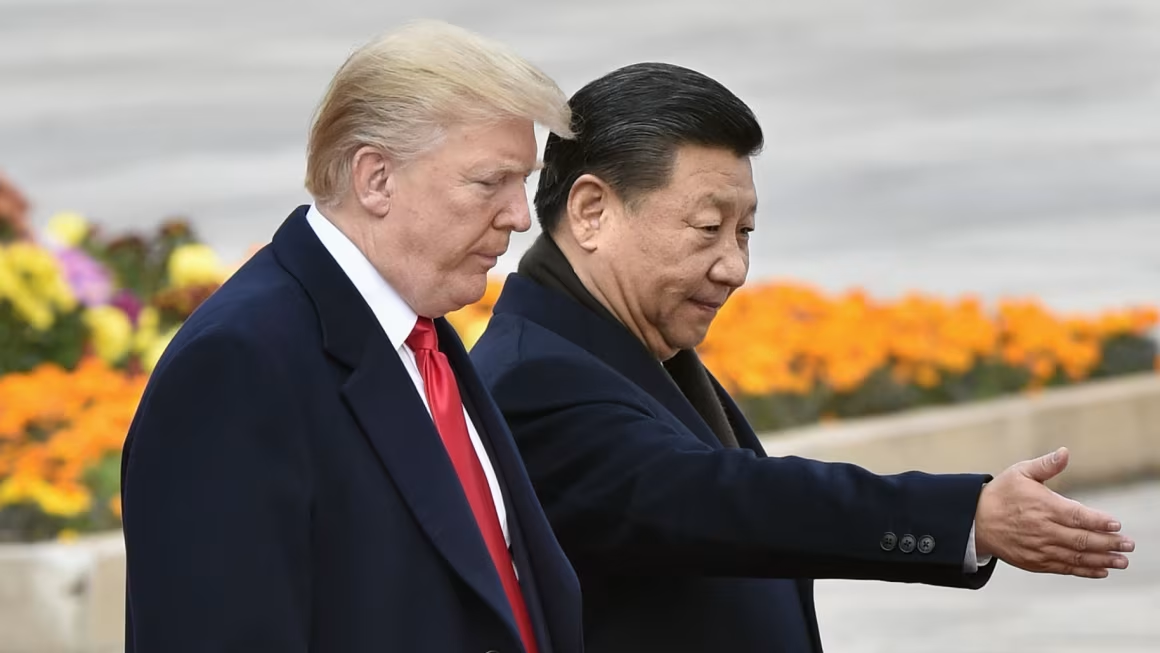
Since US President Donald Trump – just days into his second term – began imposing tariffs on China for its role in the flow of deadly opioids like fentanyl into the United States, Beijing’s message has been clear.
The fentanyl crisis is the “US’s problem,” Chinese officials have repeatedly said, and China has already done “tremendous work” to address the issue.
“We stand ready for practical cooperation with the US based on equality and mutual respect. That said, we firmly oppose the US pressuring, threatening and blackmailing China under the pretext of the fentanyl issue,” a spokesperson said in March, after Trump’s fentanyl tariffs were raised to 20% on all Chinese imports into the US.
But as those tariffs remain in place months later and, despite a truce de-escalating other duties, Beijing is signaling it’s paying attention to the issue – and may be prepared to do more.
China late last month announced it will add two more fentanyl precursors to its list of controlled substances – an expected step that brought it in line with international regulations, which its diplomats presented as a mark of “active participation” in global drug control.
Days earlier, Chinese authorities also extended control over another class of drug known as nitazenes – powerful synthetic opioids raising alarm among global health officials. The same day, Chinese Minister of Public Security Wang Xiaohong told US Ambassador to China David Perdue that Beijing was open to strengthening “practical cooperation” on drug control.
The Trump administration blames China for “sustaining” the influx into the US of fentanyl, a lab-made, synthetic opioid dozens of times more potent than heroin. Abuse of the drug and its analogues has fueled a drug overdose crisis in the US, killing tens of thousands of Americans annually, though those numbers saw a significant drop last year.
In Beijing’s view, it’s gone above and beyond international norms to stem the outflow of the drug and its component chemicals from its vast pharmaceuticals sector. In 2019 Beijing controlled fentanyl as a drug class – a significant move that drastically reduced the flow of the finished drug directly from China to the US, according to experts and US officials.
It didn’t take long for criminal networks to adapt, however. Chinese outfits shifted to selling precursor chemicals often to cartel-backed labs in Mexico, which then make and ship illegal fentanyl and similar drugs to the US. Chinese authorities have since controlled a number of these precursor chemicals. But experts and US officials say more could be done – as Beijing remains the largest source for products used to make illegal fentanyl and other synthetic drugs in Mexico and other countries.
Chinese officials haven’t explicitly linked their recent efforts at controlling two more of these substances to relations with the US, instead calling them another example of the “goodwill China has shown,” and continuing to reject the premise of the US tariffs.
But Beijing is likely expecting it will get credit for the latest moves in trade negotiations with the US. The question, however, is whether the steps will move the needle for Washington – and whether the two sides will be able to cooperate on the issue if their overall relations remain rocky.
“If Washington does not publicly recognize Chinese steps and show responsiveness to Beijing’s own concerns, then bilateral law enforcement cooperation likely will falter going forward,” said Ryan Hass, director of the John L. Thornton China Center at the Brookings Institution.